
-
 The Hong Kong Shipowners Association actively responded to the national plan and the work report of the central government, and supported the consolidation of Hong Kong's status as an international shipping, trade and financial center. The article pointed out that the shipping industry is an important pillar of Hong Kong's economy. Song Ruizhi, chairman of the Shipowners' Association, stressed that the industry would strengthen cooperation and give full play to Hong Kong's unique advantages. At the same time, shipowners will promote green decarbonization, smart shipping innovation, and set up a "maritime talent cultivation alliance" to integrate industrial and educational resources. The Budget of the SAR Government has adopted a number of recommendations of the Shipowners' Association, including tax concessions and green ship incentives, to jointly help Hong Kong enhance its strategic position in global shipping.
 -
On March 12, 2025, the Fourth Session of the 14th National People's Congress concluded successfully in Beijing. The meeting voted and passed the resolution of the government work report, the resolution of the 15th Five-Year Plan for National Economic and Social Development, and approved the 2026 National Economic and Social Development Plan and the central budget. At the same time, the meeting reviewed and approved many important laws such as the the People's Republic of China Ecological Environment Code, the the People's Republic of China National Unity and Progress Promotion Law, and the the People's Republic of China National Development Planning Law, and reviewed and approved the work reports of the Supreme People's Court and the Supreme People's Procuratorate., Marking the successful completion of various agendas of the conference.
-
On March 11, Fuchuan Group, two major state-owned enterprises in Fujian Province, and Fujian Port Group signed a strategic cooperation agreement in Fuzhou. The two sides will deepen cooperation in shipbuilding, port and shipping logistics, supply chain, financial investment and other fields, give full play to their respective advantages in advanced manufacturing and international port operation, jointly serve the country's major strategies, promote the high-quality development of Fujian, and contribute to the writing of a Chinese-style modern Fujian chapter.
-
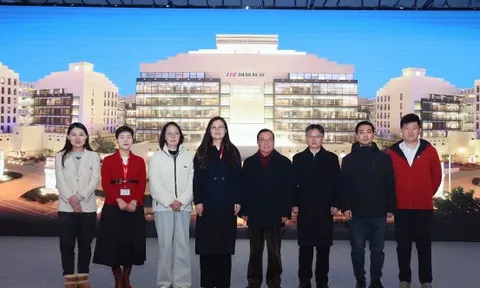 On March 6, Jia Guangdong, President of the China Agricultural International Cooperation Promotion Association and former Party Secretary of the Graduate School of the Chinese Academy of Agricultural Sciences, along with Vice President and Secretary-General Li Li, Executive Deputy Secretary-General of the Technical Transformation and Industrial Development Branch Le Rong, and Minister of Government and Enterprise Affairs of the Technical Transformation and Industrial Development Branch Liu Zeyang, were invited to visit IBIFDD. They were warmly received by IBI Vice President and FDD CEO Yin Haifeng, FDD Vice President Han Xiao, Director of Strategic Development Xu Ce, and Director of Operations Feng Bo. Both parties engaged in fruitful discussions on core topics such as the construction of the FDD seed cross-border trading platform and deep cooperation in industrial digitalization.
 -
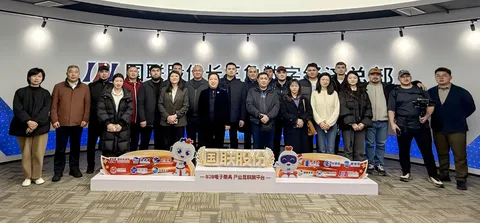 Spring returns to the shores of Taihu Lake, joining together for the grand Silk Road event. On March 6th, the IBI·LYDD Yangtze River Delta Digital Economy Headquarters welcomed an important delegation of Kazakhstan farmers. More than ten farm owners and agricultural industry representatives from Kazakhstan gathered with Chinese industry colleagues at the IBI Yangtze River Delta Digital Economy Headquarters to engage in in-depth discussions on topics such as agricultural planting, oil processing, cross-border supply chains, and digital agriculture, jointly mapping out a new blueprint for China-Kazakhstan agricultural industry cooperation. The delegation first visited the Yangtze River Delta Digital Economy Headquarters digital exhibition hall to gain a detailed understanding of IBI's achievements in industrial internet, digital supply chain, and agricultural big data.
 -
 The project of berth No. 4 and No. 5 in Shawei operation area, Tieshan East Port area, Beibu Gulf Port, has recently been officially approved by the national port shoreline, marking that the project has entered a substantial stage of promotion. The project will build two 200000-ton bulk cargo berths with a designed annual throughput of 19 million tons and a total investment of about 4.212 billion yuan. It will mainly serve the transportation of coal, iron ore and other goods in the port industry of Longgang New District. After the completion of the project, it will make up for the vacancy of large berths in the region and inject new kinetic energy into the building of the Beibu Gulf International Gateway Port.
 -
Taicang Wugang technical team through the independent implementation of the "MODBUS-TCP-based electronic scale communication optimization transformation" project, successfully in the "zero hardware input" way to eradicate the long-term plagued production of electronic scale communication interruption problem. The project innovatively adopts the idea of "de-gateway" and enables the existing PLC equipment to communicate directly with the electronic scale through software upgrade, eliminating the source of hardware gateway failure. After the transformation, the system has achieved stable operation of "zero failure" for one year in a row, saving about 28000 yuan in maintenance cost every year, and realizing the dual improvement of independent control of technology and economic benefits.
-
In February 2025, China's shipbuilding industry accounted for 80% of the global new ship market with 131 new ship orders and 4.15 million revised gross tonnage (CGT), a new high since August 2024, leading the world strongly. During the same period, South Korea's market share was 11%, and China and South Korea together accounted for 91% of the world's orders, showing a "two-strong competition" pattern. Data show that China not only far surpassing South Korea in the number of orders received, but also significantly improving its ability and quality in the field of high value-added ship types, and the number of hand-held orders ranks first in the world with a market share of 62%.
-
 On March 4th, Deputy Secretary of the District Committee and District Mayor Zhang Yanlin led a team to visit IBI and held discussions on the "good start" work for the first quarter. IBI founder and CEO Qian Xiaojun participated in the discussion. At IBI, the district leaders' delegation gained a detailed understanding of the company's development achievements in digital supply chain, cross-border e-commerce, and green industries in the digital exhibition hall, followed by a symposium. Zhang Yanlin expressed the hope that IBI will continue to increase investment in R&D and soft information business, fully leverage the spillover driving effect of platform enterprises, deepen industrial investment cooperation, and promote higher-level win-win development for both parties.
 -
On March 5, 2026, the Fourth Session of the 14th National People's Congress opened at the Great Hall of the People in Beijing. Party and state leaders Xi Jinping attended the meeting. Premier Li Qiang of the State Council made a government work report, reviewed the work in 2025 and put forward the development goals and tasks in 2026. The conference reviewed the draft outline of the 15th Five-Year Plan for National Economic and Social Development, and heard explanations on the draft ecological environment code, the draft national unity and progress promotion law, and the draft national development planning law. The meeting marked an important step taken by the country in key areas such as the construction of the rule of law, development planning and national unity.
-
This paper analyzes the global industrial chain crisis that may be triggered by a long-term blockade of the Strait of Hormuz. The article points out that the interruption of this key sea channel will first impact the transportation of oil and natural gas, and then through the complex interdependence network, step by step to polyester clothing, fertilizer grain, copper mining, semiconductor manufacturing and other ten key industries. Experts have combed through the 12-level impact timeline from logistics paralysis to industrial structure transformation, revealing the extreme vulnerability hidden behind the pursuit of efficiency maximization in modern global supply chains, which may eventually lead to economic principles giving way to resource security and triggering a far-reaching reshaping of global trade and social structure.
-
During the Spring Festival, the main domestic port listed enterprises adhere to the production, to achieve the Spring Festival "good start". The throughput of Ningbo Zhoushan Port, Shanghai Port, Guangzhou Port, Qingdao Port, Xiamen Port and other ports increased significantly year-on-year, and the foreign trade business performed strongly. Through scientific scheduling, intelligent technology application and green transformation, each port ensures the smooth flow of the logistics chain, improves the efficiency of operation, shows the vitality and resilience of the port economy, and lays a solid foundation for the development of the whole year.
-
During the National Two Sessions in 2024, the Chongqing delegation submitted a proposal for the whole delegation, calling on the state to support the acceleration of the construction of the Chongqing Logistics Hub Economic Zone. The article points out that Chongqing, as the first city in the country with the "five-type" national logistics hub of port type, dry port type, airport type, production service type, and business service type, has formed a strong channel logistics advantage and industrial foundation. The proposal aims to promote the virtuous circle of "channel belt logistics, logistics belt economy and trade, economic and trade belt industry" by strengthening the traction role of new land and sea channels in the western region, building "multi-country and multi-park" international industrial cooperation projects, and carrying out financial reform and institutional opening pilot projects, so as to build Chongqing into a logistics hub economic zone with national influence and serve the national inland opening strategy.
-
In 2025, China's total primary energy production exceeded 5 billion tons of standard coal for the first time, reaching 5.13 billion tons, setting the best effect of energy supply during the "14th Five-Year Plan" period. Non-fossil energy power generation continues to grow rapidly, and its new power generation has accounted for 112.1 per cent of the new electricity consumption of the whole society, becoming the main body of new power generation, while thermal power generation has declined for the first time in a decade. Coal production has grown steadily, crude oil production has maintained a steady increase, natural gas production has increased for nine consecutive years, and the degree of external dependence has dropped to the lowest level in the "14th Five-Year Plan", indicating that China's energy structure has continued to be optimized and the low-carbon transformation has accelerated.
-
On March 2, 2024, Chinese Minister of Transport Liu Wei met with Russian Minister of Transport Nikigin in Beijing. The two sides exchanged in-depth views on deepening Sino-Russian cooperation in the field of transportation, and agreed to further promote international road transportation, maritime river transportation, railways, civil aviation, port customs clearance facilitation, river-sea combined transportation, autonomous driving technology and low-altitude on the basis of existing cooperation results. Practical cooperation in economic and other fields will jointly expand new space for cooperation and implement the important consensus reached by the two heads of state. The Russian Ambassador to China and officials from relevant Chinese ministries and commissions attended the meeting.
-
Mall
-
Titanium Industry Chain
-
Paints & Inks Industry Chain
-
Resin Industry Chain
- PVC Additives
- Heat Stabilizer
- Plasticizer
- Flame Retardant
- Foam Agent
- Lubricant
- Impact Modifier
- Pigment
- Light Stabilizer
- Antioxidant
- Processing Acids
- Filling Agent
-
Powders Industry Chain
-
Lubricants & Oils Industry Chain
-
Coal Chemicals Industry Chain
-
Solvent Industry Chain
-
Sands & Minerals Industry Chain
-
Medical Industry Chain
-
Others
-
- Preferred suppliers
- Warehouse Logistics
- Expo Services
- Industry-Finance
- About Us